


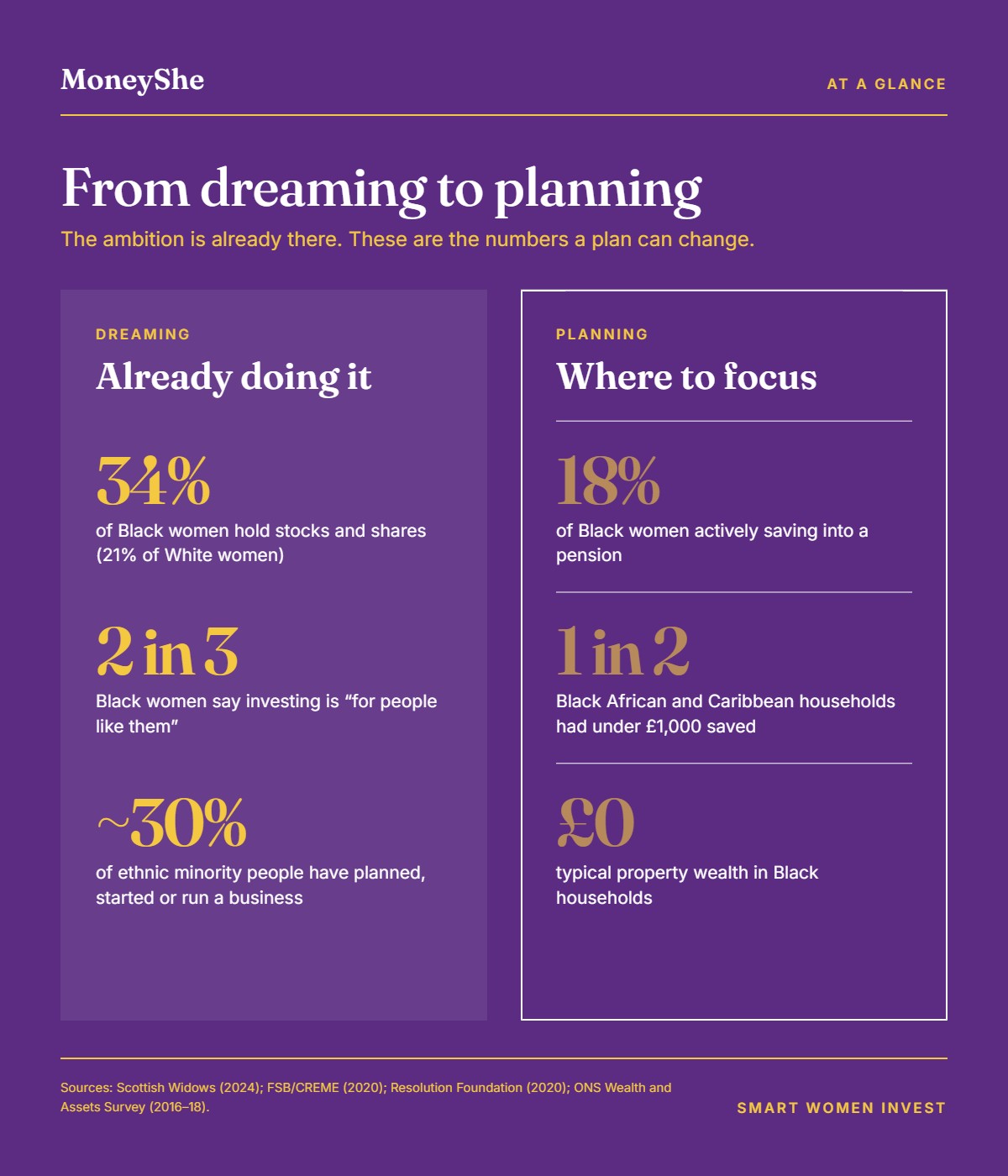
Here is a statistic that deserves far more airtime. Black women in the UK are more likely to invest in stocks and shares than White women: 34% compared with 21%. And two in three Black women say investing is “for people like them”.
So, this Black History Month, let’s put one myth to rest. This community dreams, and they invest. Now the industry needs to work to turn those dreams into a plan that grows quietly in the background, year after year, and gets passed on.
My own family came to Britain as part of the Windrush generation. My uncles were a mechanic and a teacher; my aunt was a nurse. They built careers, communities and a good part of this country’s public services. That generation rarely built wealth that could be handed down. Sadly, the numbers show how long that shadow still is.
Where the gap really is
The latest official figures put the typical wealth of a Black African household at £34,000, compared to £314,000 for a White British household. That is more than nine times as much.
The difference is not about effort. It comes down to two things that make up most of Britain’s wealth: homes and pensions.
- Homes. In England, 22% of Black African households and 31% of Black Caribbean households own their home, compared with 70% of White British households. The typical Black household has no property wealth.
- Pensions. Only 18% of Black women are actively saving into a pension, and a quarter of Black Britons have no personal or workplace pension. The typical Black African household has under £5,000 in private pensions, against £80,000 for White British households.
- Savings. At least half of Black African and Black Caribbean households had less than £1,000 put by when the Covid pandemic hit.
- Inheritance. White British adults received an average of £3,068 in inheritances over two years, Black Caribbean adults £778, and Black African adults typically nothing.
None of this is a judgement on anyone’s choices. It is what happens when a family starts without a cushion, and the tools that build wealth aren’t easy for this community to reach.
The dreamers and the builders
If you want proof of ambition, look at enterprise. Nearly 30% of people from ethnic minority backgrounds have been involved in planning, starting or running a business, almost twice the national rate. And their businesses add £25 billion a year to the UK economy.
But the money arrives more slowly. Between 2019 and 2023, just 13 Black women in the UK raised venture capital funding. Over the same five years, more than 3,700 white men did. Women-only founding teams of any ethnicity received just 2% of UK venture investment in 2022, and for Black women the share is a fraction of that.
Many Black women build their businesses the hard way, using only their own earnings. If that is you, here is one thing I would ask: don’t let your business become your only pension. Self-employed workers aren’t auto-enrolled in a workplace scheme, so nobody is thinking about your future. Paying for your future self through a pension, even a small amount, is part of building the business properly and investing in you, the biggest asset.
Six moves that move you from dreaming to planning
- Build your cash cushion first. Aim for three to six months of essential spending in an easy-access savings account. This stops an emergency, divorce, illness, bereavement, or unemployment from leading to debt.
- Never opt out of your workplace pension. Your employer must add at least 3% of qualifying earnings, and the government adds tax relief. Opting out means turning down part of your pay. Ask whether your employer will match more if you put in more.
- Use your ISA allowance. You can put up to £20,000 a year into ISAs, and any growth and income are free of UK tax. A Stocks and Shares ISA is where long-term money can work hardest.
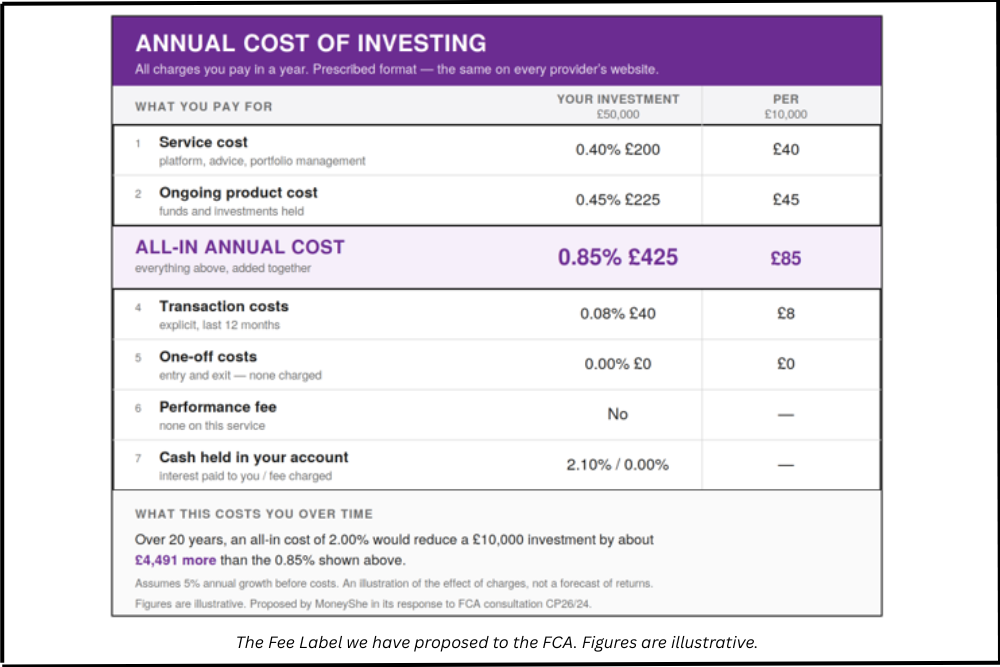
- Know exactly what you pay. Fees compound just like returns. Over 25 years, paying 1.5% a year instead of 0.5% can leave your pot about a fifth smaller. Ask for every cost in pounds and pence.
- Check before you trust. Anyone offering guaranteed high returns, or pressure to decide quickly, is a red flag. Check the firm on the FCA register before you hand over a penny.
- Plan for the next generation too. A Junior ISA lets you put up to £9,000 a year into a child’s account, tax-free, until they turn 18. Starting small and early is how wealth gets passed down.
Our grandparents’ generation had the dreams. We have tools they never had. Let’s use them.
Smart Women Invest
MoneyShe was built for women who are ready to turn ambition into a plan. Our portfolios are low-cost, fully transparent about every fee, and designed for the long term, with ISAs, Junior ISAs and pensions in one place. And we put our money where our mouth is by investing alongside you.
This Black History Month, take your first step. Start your plan with MoneyShe today.
Start your plan with MoneyShe →
Gina Miller
Founder
Winner – Most Influential Person of Caribbean & African Heritage, Powerlist Foundation, 2017
Capital at risk. The value of investments, and any income from them, can fall as well as rise, and you may get back less than you invest. Past performance is not a reliable indicator of future results. Tax treatment depends on individual circumstances and may change. MoneyShe is a brand of SCM Private LLP, trading as SCM Direct, authorised and regulated by the Financial Conduct Authority (FRN 497525).
Sources
- Scottish Widows, Black women lead the charge with a renewed focus on investing
- ONS, Household wealth by ethnicity, Great Britain: April 2016 to March 2018
- Ethnicity Facts and Figures, Home ownership
- Pensions Age, Scottish Widows research on pension inequalities in the Black community
- Resolution Foundation, Wealth gaps between different ethnic groups are large and likely to persist
- The Voice, FSB/CREME Unlocking Opportunity report
- CNBC via NBC, Extend Ventures data on Black British founders (Jan 2025)
- British Business Bank, No improvement in the share of venture capital investment to female founder teams over the past decade