

Two things can be true at the same time.
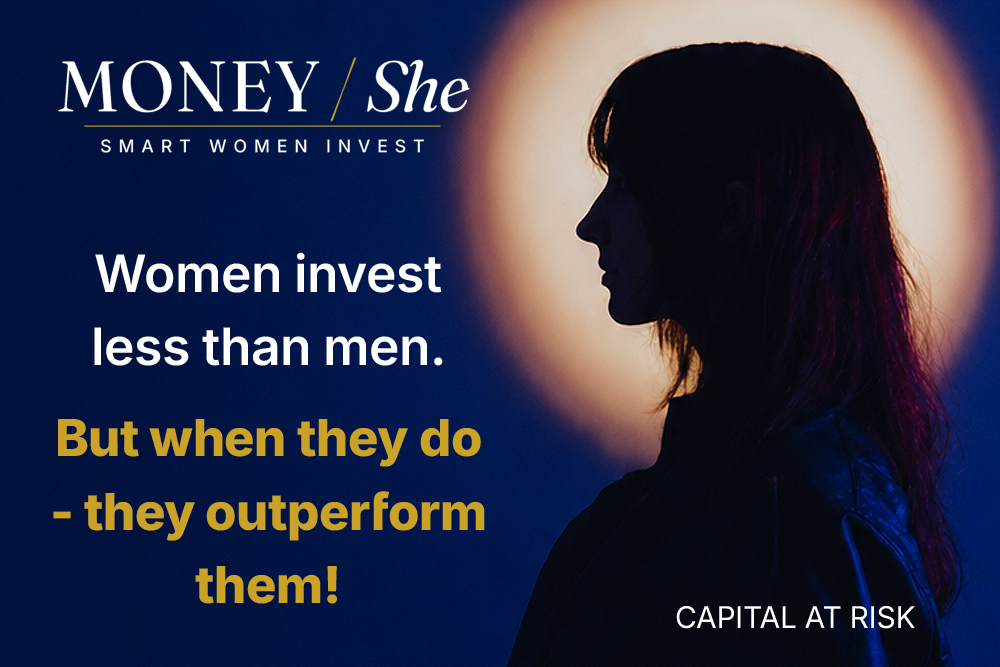
Women in the UK invest less than men. And the women who do invest tend to match or outperform them.
Hold these two truths side by side, because the space between them is the whole story. If women were genuinely worse at investing, the gap would make a kind of grim sense. But they aren’t. So, something else is keeping millions of capable women out of the market, and the personal cost in later life can be tragic.
It was never a knowledge problem
The usual explanation for the gender investment and pension gaps is that women need to learn more first, so they are waiting. It sounds reasonable, but it’s also not the whole picture.
I spent my career in investment management. I co-founded an investment firm. And I still heard the same sentences, over and over, from brilliant, financially literate women:
“I just need to understand it a little better first.”
“I’m waiting until I know enough.”
“Waiting until I have enough money.”
“I want to feel confident before investing.”
I recognised these because I’d said versions of them myself. And here is what took me years to accept: the hesitation had almost nothing to do with knowledge, and almost everything to do with confidence — as it does in so many areas of women’s professional lives.
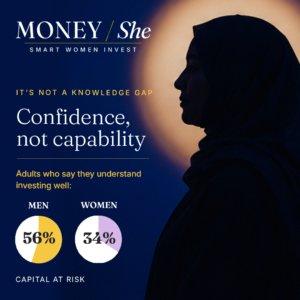
The data says so plainly. Research this year found that 56% of men say they understand investing well, against 34% of women. This is not a measure of ability; it’s a measure of how sure people feel. And the difference in how sure we feel is doing far more damage than any difference in what we actually know.
Women are good at this
Study after study finds that women who invest tend to do at least as well as, and often better than, men – even the great Warren Buffett ‘invests like a girl’. Psychologists and scientists have shown this, and the market calamities of the global financial crisis provided further statistical and anecdotal evidence.
Here are a few characteristics that distinguish female investors from male ones:
- Women spend more time researching their choices than men do. This keeps them from chasing ‘hot’ tips and trading on whims. Behaviour that tends to weaken men’s portfolios.
- Men trade 45% more often than women, and although they are more confident, they tend to be overconfident. By trading less, women get better returns and save on transaction costs and capital gains tax.
- A landmark University of California study, by economists Barber and Odean, found that women’s portfolios gained 4% more than men’s. Single women did better still, outperforming single men by 2.3%.
Women’s patience and sound decision-making epitomise the philosophy and practice of the most successful investor in history: Warren Buffett. Where men can be brash, compulsive and overly daring, women tend to be more studious, sceptical, reasonable, and react less to market noise. It’s not about better stock picking; it’s about better behaviour.
In investing, patience is worth real money. The market rewards people who stay calm – and on average, women are better at this.
So, the picture is almost the reverse of the stereotype. It isn’t that women are cautious to their cost. It’s that the very steadiness so often mistaken for timidity turns out to be one of the most valuable traits an investor can have.
So why does the gap keep widening?
Because confidence isn’t built in a vacuum. It’s shaped by who the industry talks to, and for decades, it hasn’t been talking to women.
Think about how investing has been sold. The jargon. The assumption of a high-risk, high-wealth client. The unspoken sense that this is a boys’ club with a quiet code of ‘men are the ones who grow wealth’. Marketing built around men, products explained as though you already had a finance degree, and fees buried so deep you’d need one to find them.
Faced with all that, hesitating at the door isn’t a personal failing; it’s an industry one. It’s a completely rational response from women made to feel they’re in the wrong place. And the cost of that hesitation is staggering.
UK women are collectively estimated to be missing out on around £599 billion by investing less than men – a figure larger than the entire GDP of Switzerland.
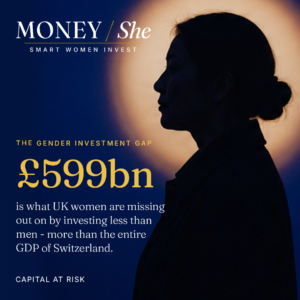
There are now roughly 11 million male investors in the UK against 7.4 million women: a participation gap of some 3.6 million people, and one that’s still growing. That’s not £599 billion of missing knowledge. It’s £599 billion of missing confidence.
“I’m waiting till I feel confident” is the most expensive sentence in investing.
Waiting until you feel ready feels responsible. It feels prudent. But time is the one ingredient in investing you can’t buy back. The market doesn’t reward the well-prepared; it rewards the well invested. Every year spent researching instead of starting is a year of compound growth you’ll never recover.
Small, consistent contributions made early tend to outgrow far larger sums invested late. So, the instinct to wait until you understand everything doesn’t protect you. It means you’re likely to pay the price when you’re older.
You will never feel one hundred per cent ready. Nobody does. The people already in the market didn’t wait for that certainty – they started, and the confidence followed.
What closes the gap
Not more research. Three things:
- A clear starting point. You don’t need to master the whole of investing. You need to understand your risk, what you’re buying, what it costs, how it’s being managed, and why you own it. That’s it.
- Honest, jargon-free information. If an explanation makes you feel stupid, the problem is the explanation, not you. Good information should leave you feeling more capable, not less.
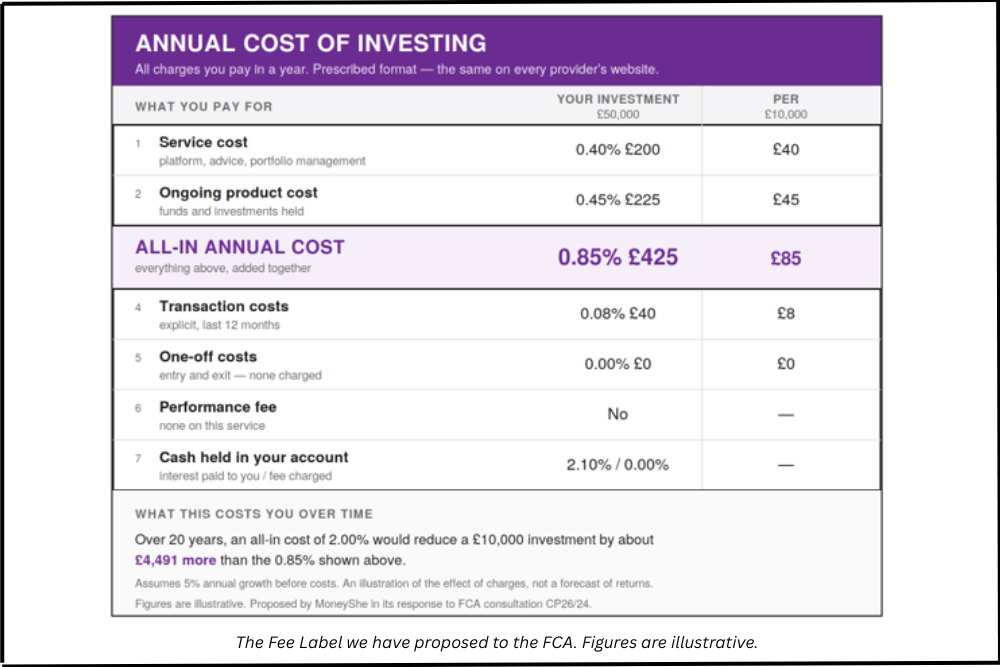
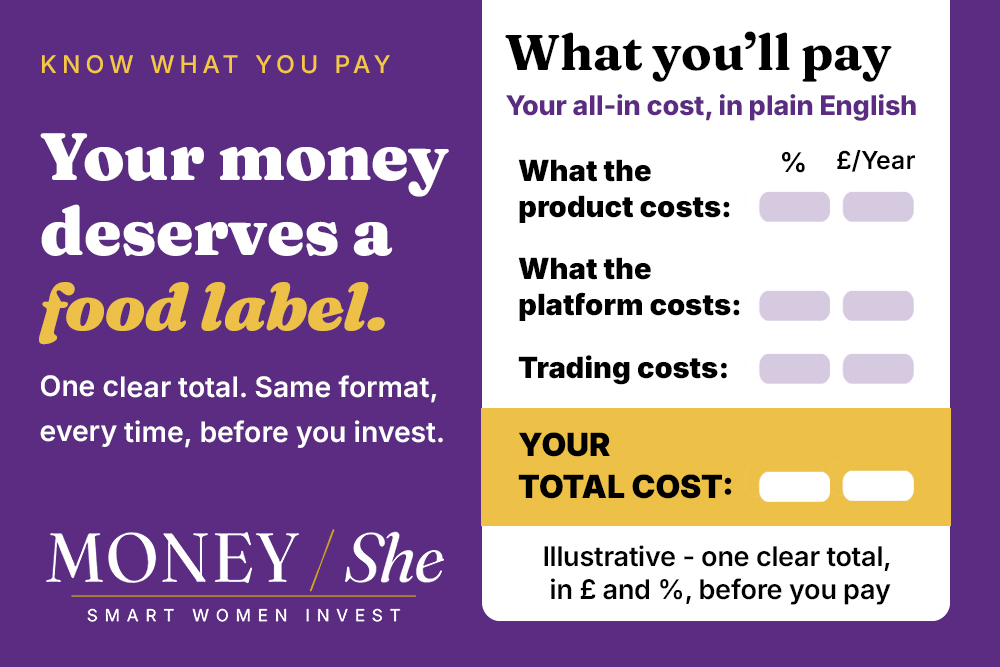
- Total transparency on fees. You cannot make a confident decision if you can’t see what you’re really paying. Hidden charges don’t just cost money — they erode trust, and it’s trust that gets women to the starting line. This is precisely why we campaign for a single, standardised, all-in cost figure: a ‘fees food label’ you can read and compare at a glance.
Where MoneyShe stands
MoneyShe was built from the opposite starting assumption to most of the industry: that you’re perfectly capable of making your own financial decisions, and that our job is to hand you clear information – not to talk over your head or make you feel you don’t belong.
Plain English and 100% transparent. Every fee shown up front, in one number. No assumption that you need permission, a finance degree, or a lot of money to begin.
The good news is that the confidence gap is closing. More women are investing than ever before. But closing slowly isn’t the same as closed, and right now the gap is stagnating. We’d like to close it faster!
You don’t need to know enough first. You need an honest, welcoming place where people are invested alongside you to start.
Smart women invest. And the ones who start today will thank themselves for decades.

MoneyShe is a trading brand of SCM Private LLP, which offers low-cost, transparent investment services. We think you should always know when the people offering you information also offer you a product. Everything above is intended as general information, not personal financial advice. Investments can fall as well as rise, and you may get back less than you put in.