

Let’s be honest with each other. Black Friday isn’t really a sale. It’s a very clever way for retailers to make spending feel like saving. So, before you hit “buy now”, try my Black Friday test.
The quick version
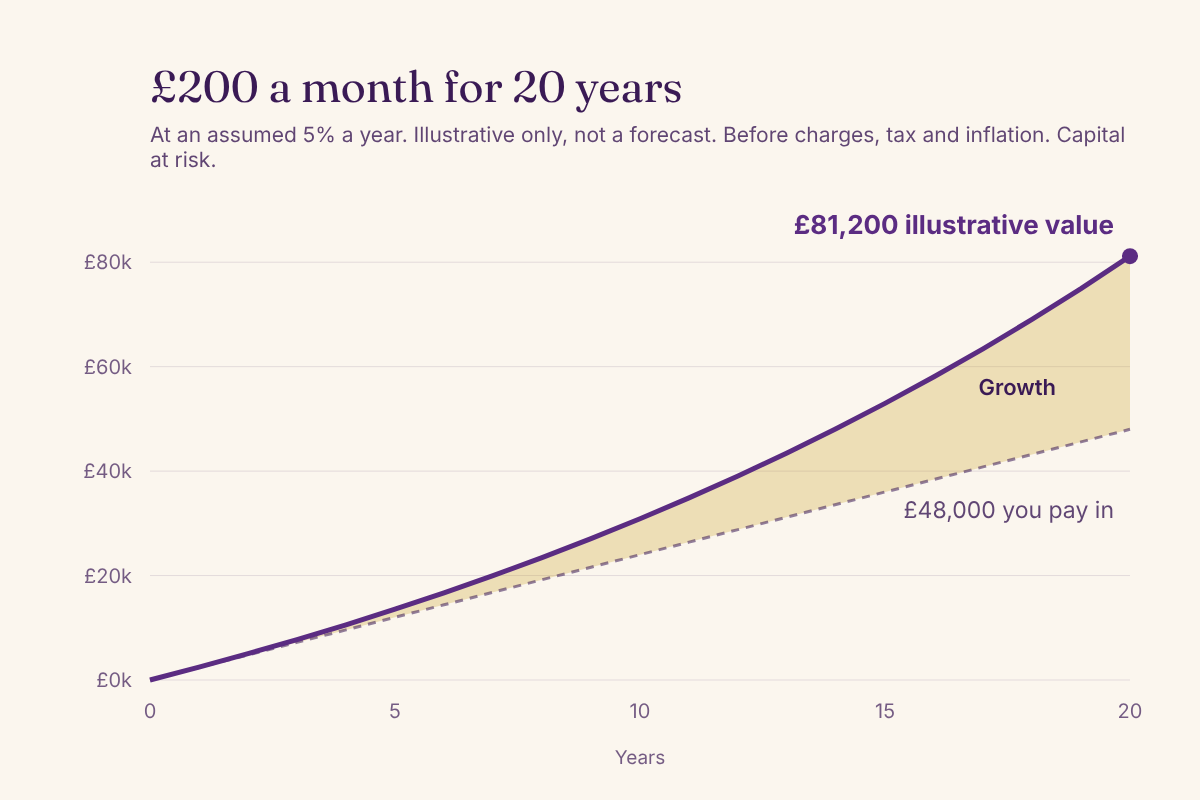
- £200 a month for 20 years is £48,000 of your own money. At an assumed 5% a year before charges, it could grow to around £81,200 (an illustration, not a promise).
- One extra percentage point in fees could cost you around £7,900 over that time.
- Cash that earns less than inflation quietly loses buying power.
- Before you buy: would I pay full price for this, and what could this money be worth in 20 years?
And no, this isn’t a lecture about lattes or avocado on toast. We’ve had quite enough of those. There’s absolutely nothing wrong with treating yourself now and then. I just want you to know the real price of things, so you can make genuinely smart choices.
Every bargain has a secret second price tag
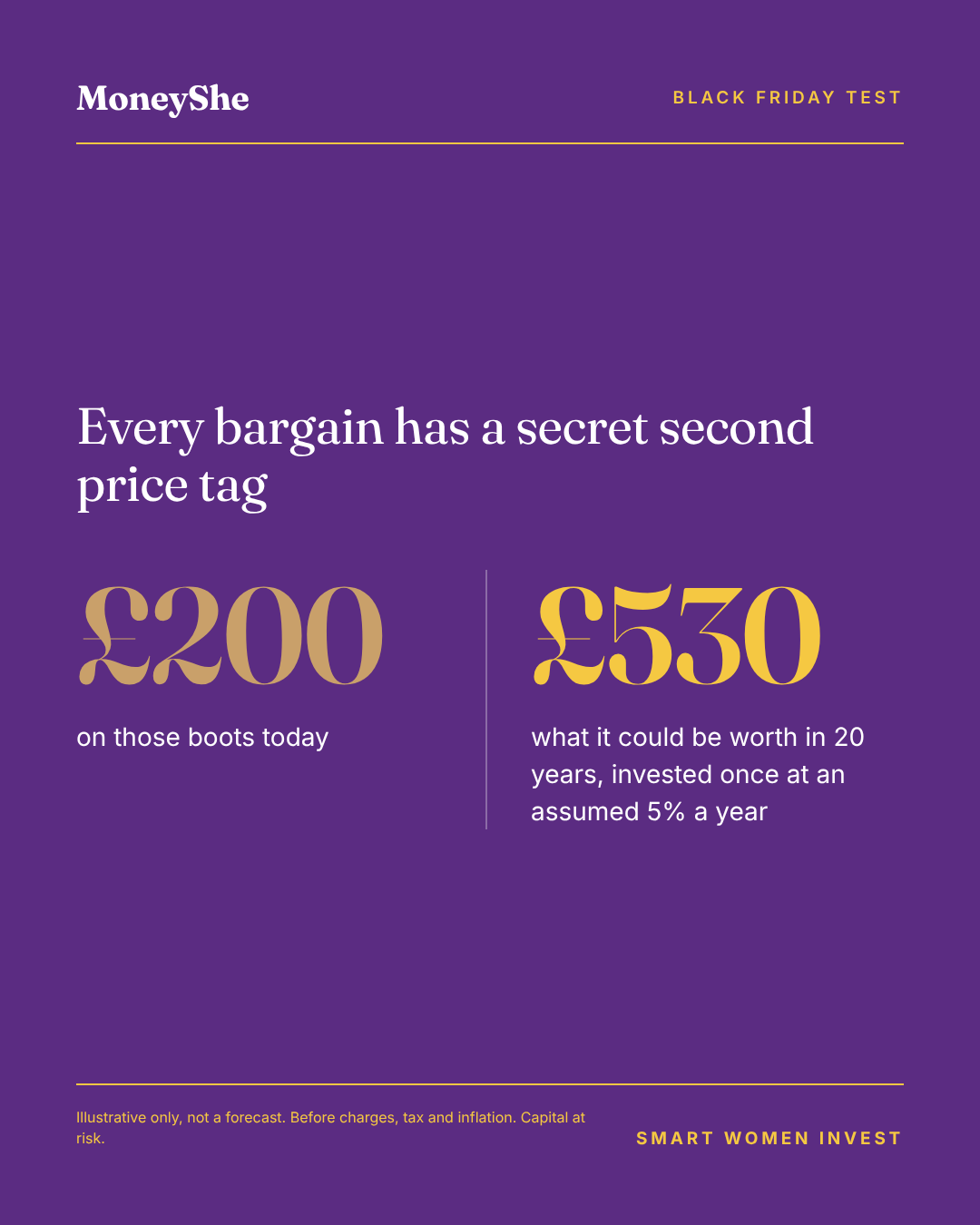
There’s the price on the label. Then there’s the one nobody shows you: what that money could have grown into. Pop £200 into investments once, leave it alone for 20 years and, at an assumed 5% a year before charges, it could be worth around £530. So those boots? £200 today could be over £500 for your future.
Now, here’s where it gets interesting.
What if £200 a month went to you?
Imagine £200 a month going into investments for 20 years, instead of into a basket of things you’ll have forgotten by February. That’s £48,000 of your own money in total. Here’s what it could look like at three different growth rates.
Hand on heart, these are illustrations, not promises: markets go up and down, and anyone who says they know exactly what’s coming is selling you a false story.
| Growth a year | You pay in | Could be worth after 20 years |
|---|---|---|
| 2% | £48,000 | £58,800 |
| 5% | £48,000 | £81,200 |
| 8% | £48,000 | £113,800 |
Illustrative only, not a forecast. Assumes £200 invested at the end of each month for 20 years at a constant annual growth rate, before charges, tax and inflation. Real returns vary from year to year and can be negative. Figures rounded to the nearest £100. Source: SCM Direct calculations.
Look at that middle line. At 5% a year, around £33,000 of the pot is growth: money you never paid in. That’s compounding. Your money makes money, then that money makes money. It’s slow at first, which is exactly when most people give up. Don’t. By the final year, growth alone could be adding around £3,800, more than the £2,400 you put in yourself.
Your money, working harder than you. I love that for you.
Got a little more to put to work? If you can use your full ISA allowance (currently £20,000 a tax year) in a lump sum, then add £200 a month from the next tax year, here’s how that could look:
| Growth a year | You pay in | Could be worth after 20 years |
|---|---|---|
| 2% | £68,000 | £88,600 |
| 5% | £68,000 | £134,200 |
| 8% | £68,000 | £207,000 |
Illustrative only, not a forecast. Assumes a £20,000 lump sum invested at the start, then £200 at the end of each month for 20 years, at a constant annual growth rate, before charges, tax and inflation. Because the ISA allowance applies per tax year, the monthly payments begin in the following tax year. Figures rounded to the nearest £100. Source: SCM Direct calculations.
Same £200 a month, but that £20,000 head start could more than double on its own, to around £53,000 at 5% a year. Starting with what you can, when you can, really does pay.
The one thing that’s never on sale
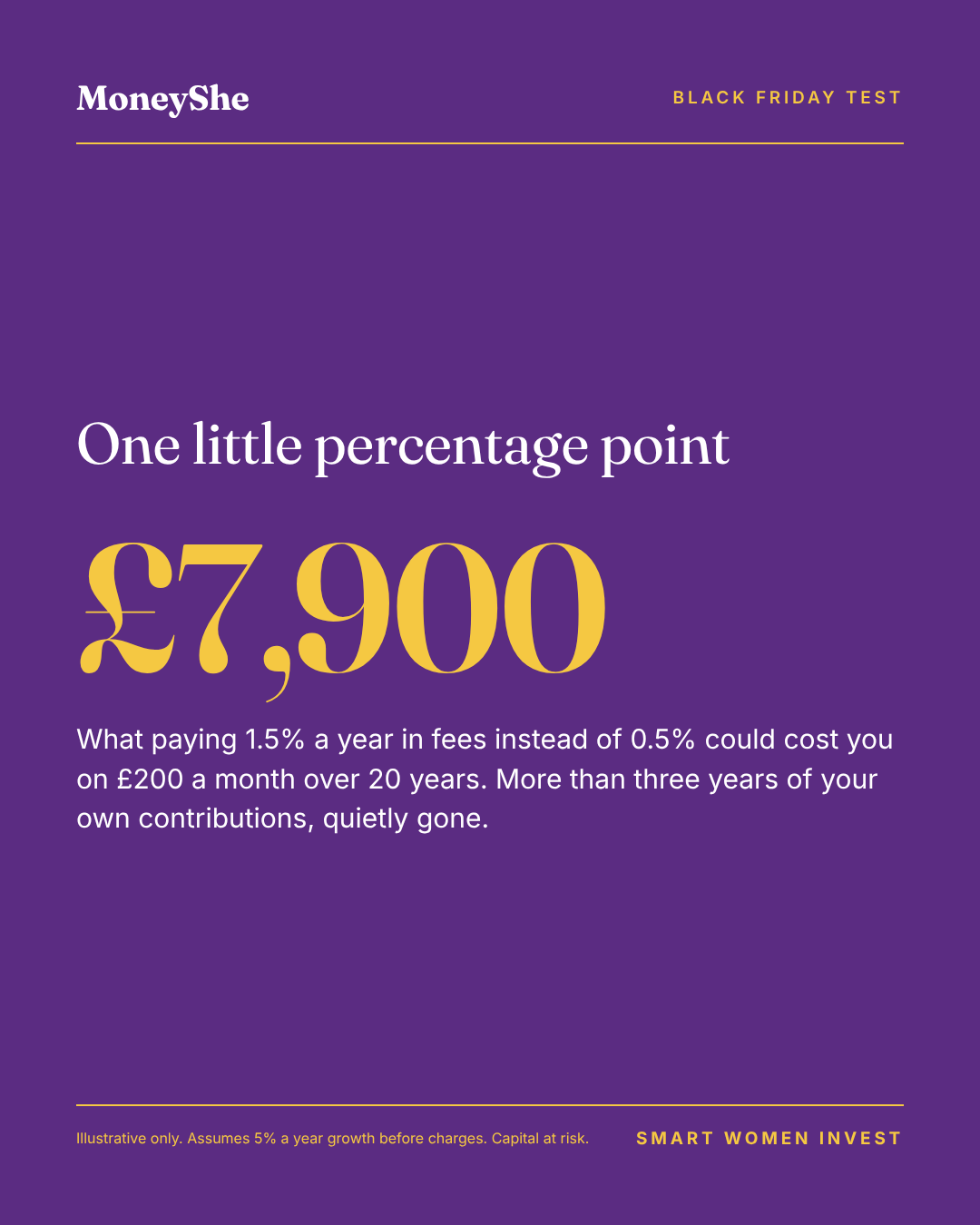
Now for the bit the industry would really rather you didn’t notice. Fees compound too, just in the wrong direction. Same 5% example: pay 0.5% a year in charges and your pot could be around £76,800. Pay 1.5%, and it could be around £69,000.
One little percentage point = about £7,900. More than three years of your own contributions, quietly gone. No flashing banner, no countdown clock. It’s why I’ve spent years campaigning for every cost to be shown in pounds and pence.
You’d never accept a mystery charge on a dress. Don’t accept one on your future.
And doing nothing isn’t free, either
I know, cash feels safe, and when interest rates are higher, it can feel like a winner. But in the long run, the real question is whether your savings will keep up with rising prices.
Even money in a savings account paying 4% is going backwards if inflation runs higher than that, and that’s before any tax on the interest. Not investing is still a choice. It just doesn’t send you a receipt.
Your Black Friday test (screenshot this)
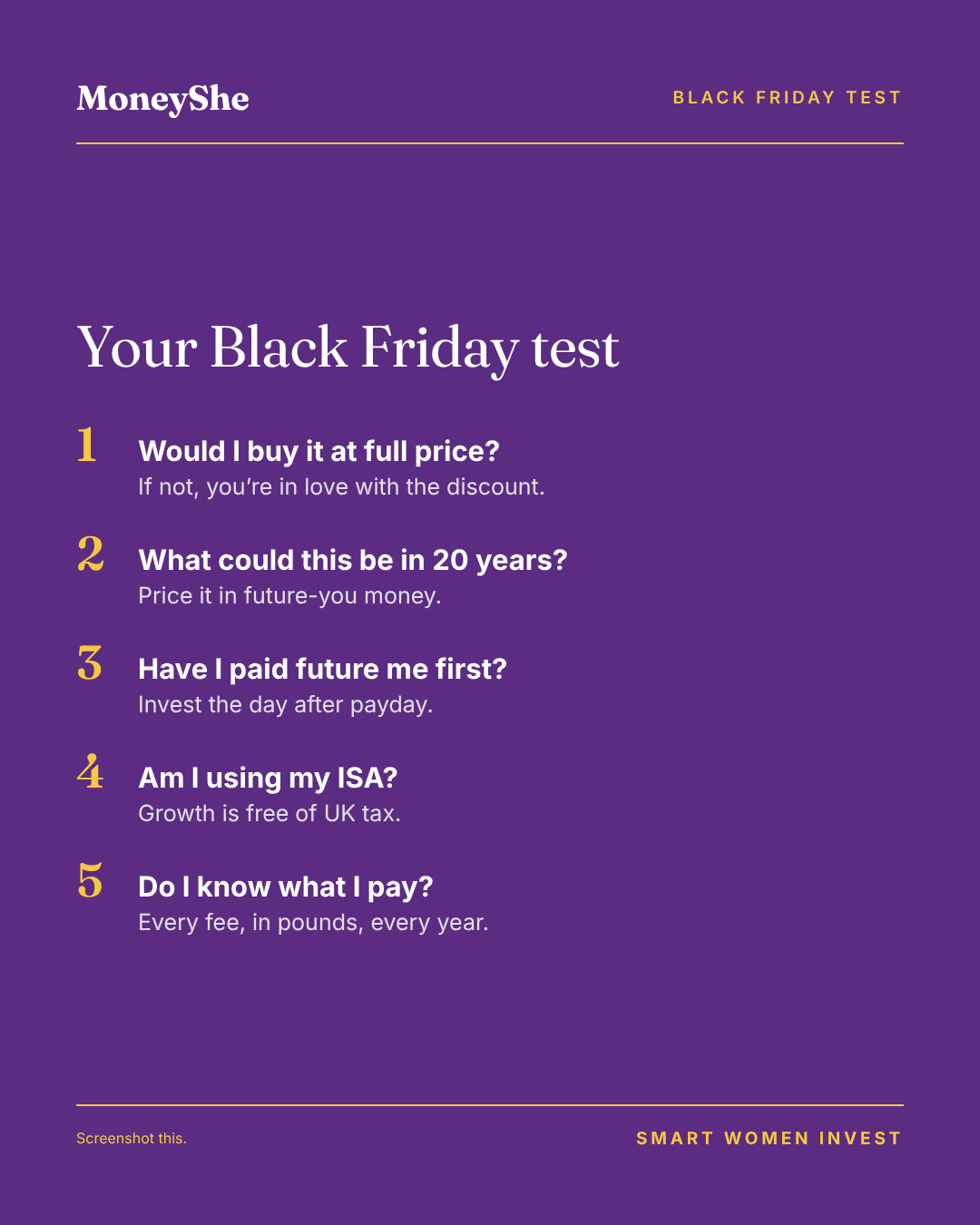
- Would I buy it at full price? If not, you’re in love with the discount, not the thing.
- What could this be in 20 years? Price it in future-you money, not just today’s.
- Pay future you first. Set your monthly investment to leave the day after payday, before the shopping gets a look in.
- Use your ISA. Growth inside a Stocks and Shares ISA is free of UK tax. Using your allowance every year is one of the easiest wins going.
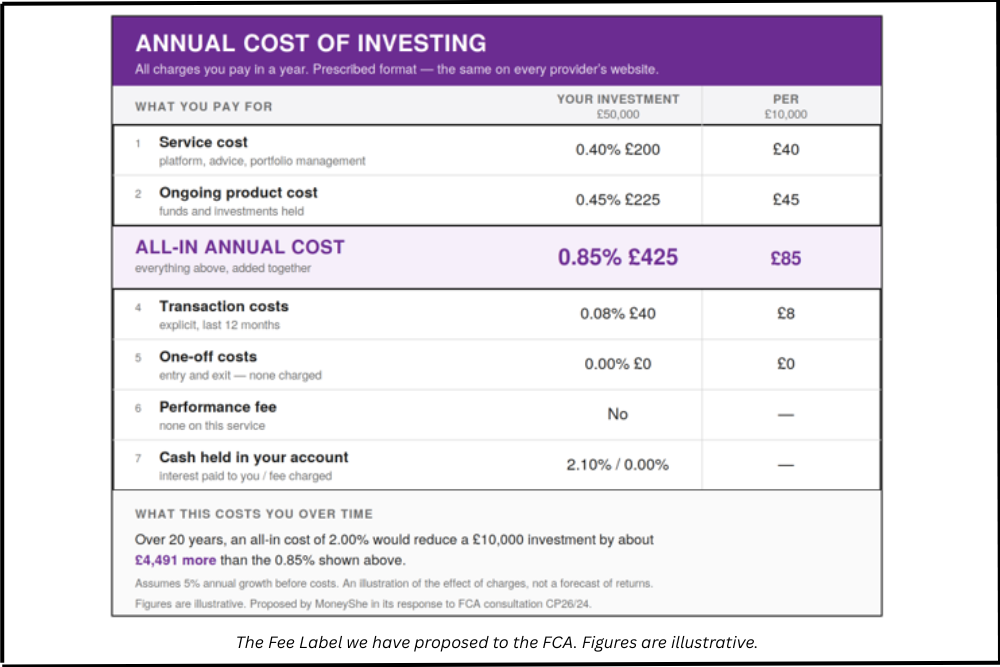
- Ask what you pay. Every fee, in pounds, every year. If they can’t tell you, walk away. You deserve better.
So, treat yourself when you want to. Just make sure future you is on the list too. She’s going to be extremely grateful.
Smart Women Invest
MoneyShe was built for women like you, who want your money to work as hard as you do.
Our portfolios are low-cost, completely upfront about every fee, and built for the long haul, with ISAs, Junior ISAs and pensions all in one place.
They’re made up of funds that trade every day, so if life throws you a curveball, you can get to your money when you need it, though it could be worth less than you put in (and remember that pensions and Junior ISAs are locked away until a set age). You can start from £10,000 plus £200 a month, and I invest my own money right alongside yours. No jargon, no hard selling, no unnecessary risk.
This Black Friday, give yourself the gift that could keep on growing.
Start your plan with MoneyShe →
Gina Miller
Founder
Common questions
What could £200 a month become if I invest it for 20 years?
You’d pay in £48,000. Before charges, tax and inflation, it could be worth around £58,800 at 2% a year, £81,200 at 5% or £113,800 at 8%. These are illustrations, not promises: markets go up and down, and you could get back less than you put in.
Do investment fees really make that much difference?
Yes, because they compound just like returns. On £200 a month growing at 5% a year before charges, paying 1.5% a year instead of 0.5% could cost you around £7,900 over 20 years. That’s more than three years of your own contributions.
Isn’t cash safer than investing?
Cash is the right home for your emergency fund and money you’ll need in the next few years. Over the long term, money that earns less than inflation slowly loses buying power. Investing gives your money the chance to grow faster, but its value can fall as well as rise.
How much can I put into a Stocks and Shares ISA?
The ISA allowance is currently £20,000 per tax year, across all your ISAs. Any growth and income inside a Stocks and Shares ISA is free of UK tax. Allowances and tax rules can change.
What’s the minimum to start investing with MoneyShe?
£10,000 to start, plus £200 a month.
Can I get my money out if life changes?
Our portfolios use funds that trade every day, so ISA money can be taken out when you need it, though it could be worth less than you put in. Pension money is normally available from age 55 (rising to 57 from April 2028), and Junior ISA money belongs to your child at 18.
Capital at risk. The value of investments, and any income from them, can fall as well as rise, and you may get back less than you invest. The figures in this article are simulated illustrations based on assumed growth rates. They are not forecasts, they do not represent any MoneyShe portfolio, and they are not a reliable indicator of future performance. Past performance is not a reliable indicator of future results. Tax treatment depends on individual circumstances and may change. MoneyShe is a brand of SCM Private LLP, trading as SCM Direct, authorised and regulated by the Financial Conduct Authority (FRN 497525).